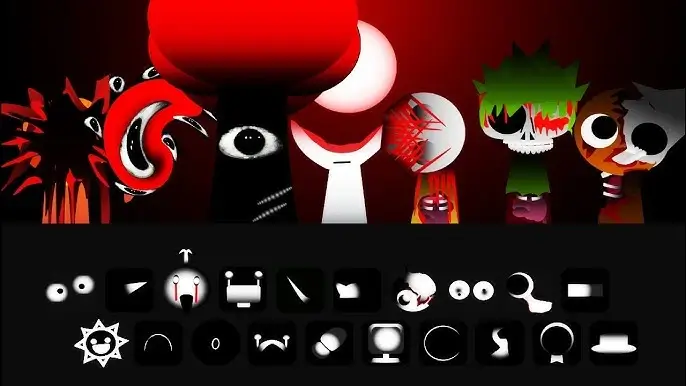
Sprunki Phase 8 vs Phase 9: Differences & Best Pick
Compare Sprunki Phase 8 vs Phase 9 by mechanics, sound, difficulty, combos, and play style—then choose Cosmic Bass or Retro Wave.
Sprunki Phase 8 and Phase 9 sit next to each other in the full Sprunki Phases lineup, but they are not two versions of the same idea. Phase 8: Cosmic Bass Edition is built around low-end resonance and immediate placement decisions. Phase 9: Retro Wave Edition shifts to synthwave and a tape-warp effect that changes sounds over time.
Quick Answer: Is Phase 8 or Phase 9 Better?
The short verdict: play Phase 8 for bass power and precise layering; play Phase 9 for neon atmosphere and evolving analog texture. Both are free browser games and work as standalone experiences, so you do not need to finish one before trying the other.
Neither phase is universally better. Phase 8 is the better pick for bass-heavy, technical mixing; Phase 9 is the better pick for synthwave atmosphere and a more approachable first session. If you only have a few minutes, choose by sound style rather than phase number.
Phase 8 vs Phase 9 at a Glance
| Comparison | Phase 8 — Cosmic Bass | Phase 9 — Retro Wave |
|---|---|---|
| Core mechanic | Resonance: nearby bass layers reinforce, cancel, or transform one another | Tape-warp: sounds gain pitch wobble, saturation, and high-frequency roll-off over time |
| Main sounds | 808 kicks, wobble bass, sub-harmonic drones, processed vocals | Moog-style leads, FM bass, gated drums, arpeggios, analog pads |
| Creative focus | Position, frequency separation, and restraint | Timing, stereo space, and managing gradual degradation |
| Feedback | Immediate and seismic: floor vibration, light cracks, shockwaves | Gradual and nostalgic: scan lines, VHS texture, neon and chrome effects |
| Guide difficulty label | Advanced | Intermediate |
| Typical mistake | Adding too many low-end layers and creating a muddy mix | Leaving every element active until the midrange becomes crowded or dull |
| Easy starting combo | Deep Core Resonance | Neon Highway |
| Best listening setup | Headphones or speakers with strong bass response | Any modern setup; headphones help reveal stereo movement |
| Best for | Bass fans, dubstep listeners, technical mix builders | Synthwave fans, retro aesthetics, patient sound explorers |
The Biggest Difference: Space vs Time
The clearest way to understand Sprunki Phase 8 vs Phase 9 is to ask what makes the mix change.
In Phase 8, the answer is space. Put bass-focused characters near one another and their frequencies interact through resonance. A new layer can reinforce the existing low end, cancel part of it, or create a different modulation pattern. You hear the consequence as soon as you place the character, which makes Phase 8 feel physical and high-impact. The challenge is deciding whether the mix actually needs another layer.
In Phase 9, the answer is time. A freshly placed character begins clean, then gradually picks up tape-like pitch wobble, saturation, and a softer high end. The arrangement can change even when you do nothing. Phase 9 therefore rewards listening across several loops, deciding which textures should age, and refreshing the elements that need to stay crisp.
That difference produces two distinct creative loops:
- Phase 8: place, hear the interaction, subtract or reposition.
- Phase 9: place, wait, hear the evolution, refresh or keep the texture.
For the full mechanic breakdowns, open the Phase 8 guide and Phase 9 guide.
Sound: Seismic Bass vs Retro Synthwave
Phase 8 concentrates most of its personality in the low frequencies. Its 808 kicks, dubstep-style wobbles, and sub-harmonic drones can produce a huge sound with only a few characters. This makes subtraction important: if two elements compete for the same bass range, adding a third usually hides detail instead of improving the track.
Phase 9 spreads its palette across more of the spectrum. FM bass supports the foundation, gated drums supply the pulse, Moog-style leads carry melody, and arpeggios or pads fill the atmosphere. Its challenge is less about sub-bass collisions and more about keeping the midrange clear while the tape-warp effect softens older elements.
If you are listening on laptop speakers, Phase 9's leads and gated drums are easier to hear clearly. Phase 8 still works, but headphones or bass-capable speakers reveal more of its resonance detail. This is a practical equipment difference, not a requirement to play.
Difficulty: Which Phase Is Harder?
The dedicated guides label Phase 8 advanced and Phase 9 intermediate, but those labels do not mean every player will find Phase 9 easier.
Phase 8 is less forgiving at the moment of placement. Resonance can turn a controlled low end into a crowded one with a single addition, and small speakers make frequency masking harder to diagnose. The upside is immediate feedback: you can usually identify the problem by removing the most recent bass layer.
Phase 9 avoids that sudden resonance threshold, yet it asks for attention over time. Tape-warp changes the mix gradually, and several leads, vocals, and bass harmonics can compete in the midrange. Players who prefer instant cause and effect may find this slower form of troubleshooting surprisingly demanding.
So the most useful answer is:
- Phase 8 is harder for frequency control and restraint.
- Phase 9 is harder for long-form listening and texture management.
If you want a broader progression view, use the Sprunki phase difficulty ranking as a guide, then judge both editions with the short test below.
Combos and Replay Value
Phase 8's replay value comes from testing different resonance relationships. Deep Core Resonance is a controlled place to start, while Gravity Drop demonstrates how strongly two 808-focused elements can interact. More complex setups such as Harmonic Overload make sense only after you can keep a smaller bass arrangement clean. The Phase 8 tips guide explains how to build incrementally.
Phase 9's replay value comes from hearing the same arrangement at different ages. Neon Highway gives you an accessible lead-and-bass foundation, Cassette Groove embraces audible degradation, and Tape Saturation Stack pushes the time-based effect to its extreme. The Phase 9 tips guide covers when to refresh characters and when to let them keep warping.
Neither replay loop is automatically better. Phase 8 creates variety through different placements; Phase 9 creates variety through placement plus elapsed time.
Which One Should You Play?
Choose Sprunki Phase 8 if most of these sound like you:
- You want the strongest 808 and sub-bass emphasis.
- You enjoy quick cause-and-effect feedback.
- You like solving muddy mixes by removing or repositioning layers.
- You want to practice low-frequency separation and restraint.
Choose Sprunki Phase 9 if most of these sound like you:
- You prefer synthwave, gated drums, analog leads, and neon visuals.
- You enjoy sounds that evolve while a loop continues.
- You like deciding which elements should stay clean and which should degrade.
- You want a more atmospheric session built around patience and texture.
Still undecided? Start with Phase 9 if you want an immediately recognizable retro palette. Start with Phase 8 if the technical bass challenge is the main attraction. Playing both is the fastest way to understand why the transition between them feels like a creative reset rather than a simple sequel.
A 10-Minute Phase 8 vs Phase 9 Test
Use the same process in both editions so the comparison is fair:
- Build a three-character mix. Start with rhythm, add bass, then add one melodic or texture element.
- Let it run for two full loops. In Phase 8, listen for masking; in Phase 9, listen for tape-warp changes.
- Add one more character. Notice whether the new layer improves clarity, weight, or atmosphere.
- Remove the weakest layer. Compare the simpler mix with the fuller one.
- Pick the edition that made you want to keep experimenting. That is a better signal than a generic difficulty label.
This test also reveals the central design difference: Phase 8 tells you a lot at the instant of placement, while Phase 9 reveals more as the arrangement ages.
What Stays the Same?
Both editions use the familiar drag-and-drop Sprunki format, run in a modern browser, and can be played without downloading software. Both also reward selective layering rather than filling every available position. The controls remain approachable; the depth comes from how each edition's sound system reacts to your choices.
FAQ
Is Sprunki Phase 8 or Phase 9 better?
Phase 8 is better for players who want powerful bass, immediate feedback, and precise low-end layering. Phase 9 is better for players who prefer synthwave, evolving textures, and a more atmospheric session. Neither is universally better, so choose the one that matches the sound you want to build.
What is the main difference between Sprunki Phase 8 and Phase 9?
Phase 8 changes the mix through spatial resonance between bass-focused characters. Phase 9 changes the mix over time through tape-warp, adding pitch wobble, saturation, and high-frequency roll-off. Phase 8 emphasizes low-end placement; Phase 9 emphasizes timing and evolving texture.
Is Sprunki Phase 9 harder than Phase 8?
The Phase 8 guide labels it advanced, while the Phase 9 guide labels it intermediate. Phase 8 is generally less forgiving when bass layers collide, but Phase 9 still requires ongoing attention because sounds degrade over time and can crowd the midrange. Which feels harder depends on whether you prefer immediate frequency decisions or gradual texture management.
Should I play Phase 8 or Phase 9 first?
Play Phase 8 first if you want a technical bass-layering challenge. Play Phase 9 first if you prefer synthwave and a more atmospheric introduction. The editions are standalone, so there is no required order.
Can I skip Phase 8 and go directly to Phase 9?
Yes. Phase 9 does not require progress or knowledge from Phase 8. Its tape-warp system is independent of Phase 8's resonance mechanic, and both games can be opened directly in a browser.
Do I need headphones for Phase 8 or Phase 9?
No, but headphones help. They are especially useful in Phase 8 because small speakers may not reproduce its deepest bass detail. In Phase 9, headphones make stereo movement and subtle tape-warp changes easier to hear.
Which beginner combo should I try first?
In Phase 8, try Deep Core Resonance as a controlled bass foundation before adding more layers. In Phase 9, try Neon Highway for an accessible retro-wave starting point. Build outward one character at a time so you can hear what each addition changes.
Final Verdict
Phase 8 wins for bass impact, immediate feedback, and technical low-end practice. Phase 9 wins for synthwave character, evolving sound, and relaxed experimentation. If your ideal mix feels seismic, choose Cosmic Bass. If it feels like a worn cassette playing beneath a neon sunset, choose Retro Wave.
Play Sprunki Phase 8 | Play Sprunki Phase 9 | Browse All Phases
Comparison methodology: this guide compares the documented mechanics, sound palettes, visual feedback, beginner combos, and troubleshooting advice in the Phase 8 and Phase 9 game pages, guides, and tips. It was reviewed and updated on July 20, 2026.
Ready to play Sprunki Phase 8?
Play Sprunki Phase 8 NowAuthor

Categories
- Comparisons
More Posts
How Sprunki Phase Labels Work on Fan-Made Project Sites
Learn what a Sprunki phase label can and cannot prove, how this directory verifies external projects, and how to evaluate a fan-made page before loading it.
A Responsible Checklist for Testing Browser-Based Music Projects
Use this repeatable checklist to test an external browser music project without inventing features, exposing unnecessary data, or losing track of the source.
How to Evaluate a Sprunki Mod Before You Open It
A source-first checklist for evaluating fan-made Sprunki mods without relying on invented rankings, popularity numbers, or unsafe download claims.